
People have asked me how to take better hiking photos. So I wanted to put something together with my top DSLR tips and hacks. I hope you enjoy this post and find it helpful.
Note: This article is intended for those already familiar with the Ten Essentials, Leave No Trace and basic photo composition.
1) Polarizer filters are your best friend.
Ever seen those shots where you can see into the water? That would be a circular polarizer filter at work. They minimize reflection and glare. This means the sky looks bluer, the colors of fall pop more, and yes, your camera can “see” into the water (if you can too).
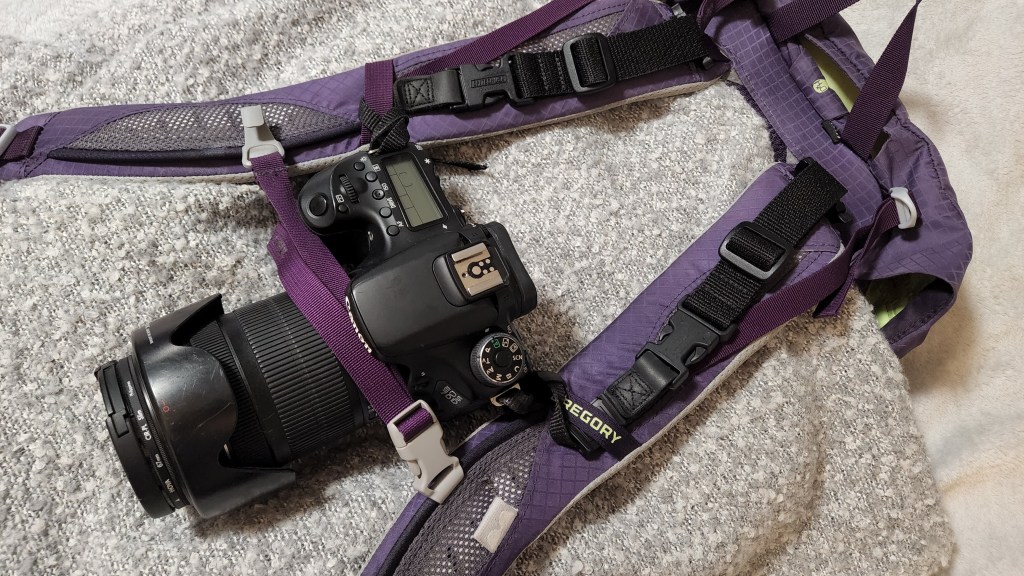
2) Sternum strap hack.
By wearing the camera in the front, you evenly distribute the weight. Using your sternum strap secures the camera against your person. It also gives your neck a rest.
3) Bring the appropriate lens cleaner.
Trails can be dusty, really dusty. You will appreciate having an air blower. Sand, dust, and sensitive cameras do not mix.
4) Check the Washington Trail Association (WTA) for seasonal color.
Using the WTA trip reports helps plan for peak wildflower, autumn, and larch viewing from wildflowers to larches.

5) Invest in a tripod.
For years I held out and tried to use whatever I could on the trail (usually rocks) to lean my camera against. The result was many blurry shots or a loss of detail. Tripods are essential if you want to get those silky exposure shots of waterfalls. I often see them at thrift shops but there are lighter-weight options. Every ounce counts when going uphill.

6) If you have to cross a stream, bring a sizeable waterproof ziplock bag (or a dry bag).
Streams crossings can be dangerous, especially if shin level or higher. If you lose your footing, you can be relieved that at least your camera stayed dry. The same goes for rain.
7) Rock hop.
It is hiking etiquette to stay on the trail. Unfortunately, I sometimes see overeager photographers trying to get the “best angle” by trampling over delicate vegetation. Please don’t be like them! If you would like to leave the trail for a better view, please stick to rocks.
Do you have a strategy that you would like to share? Feel free to leave a comment below.
 Erin Kyleen
Leave a comment